Pascal Magnin’s “Reines d’un Jour” utilizes a dynamic variety of camera angles and 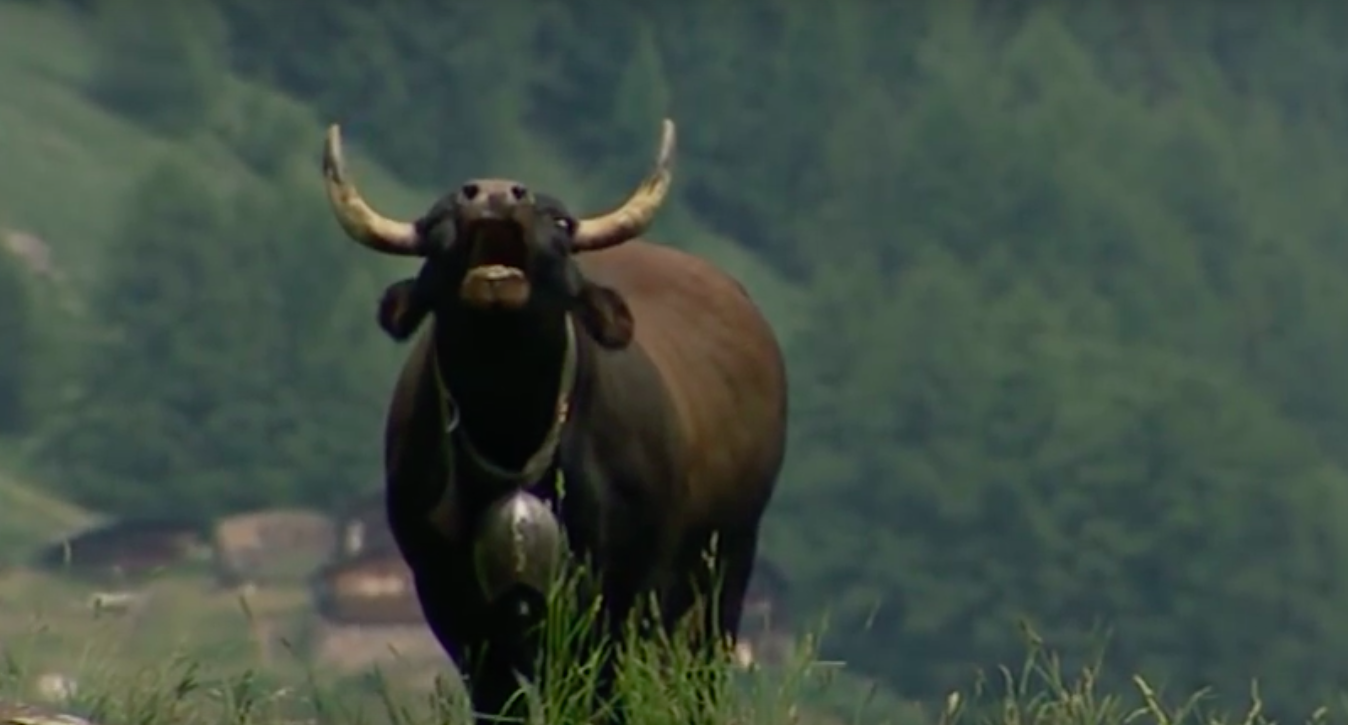 transitions to reflect the ever-changing quality of movements in the choreography presented. The relationship between camera and dancer as well as dancer and audience provokes a communal feel shared between both the dancers and the viewer.
The film begins with a heightened sense of awareness. The camera angles shift quickly between low level, spotting running feet, and eye level, watching bodies dart across the screen. Then, the camera shifts to panning, following dancers as they roll down a hill. This allows the audience to feel connected to the action, for the panning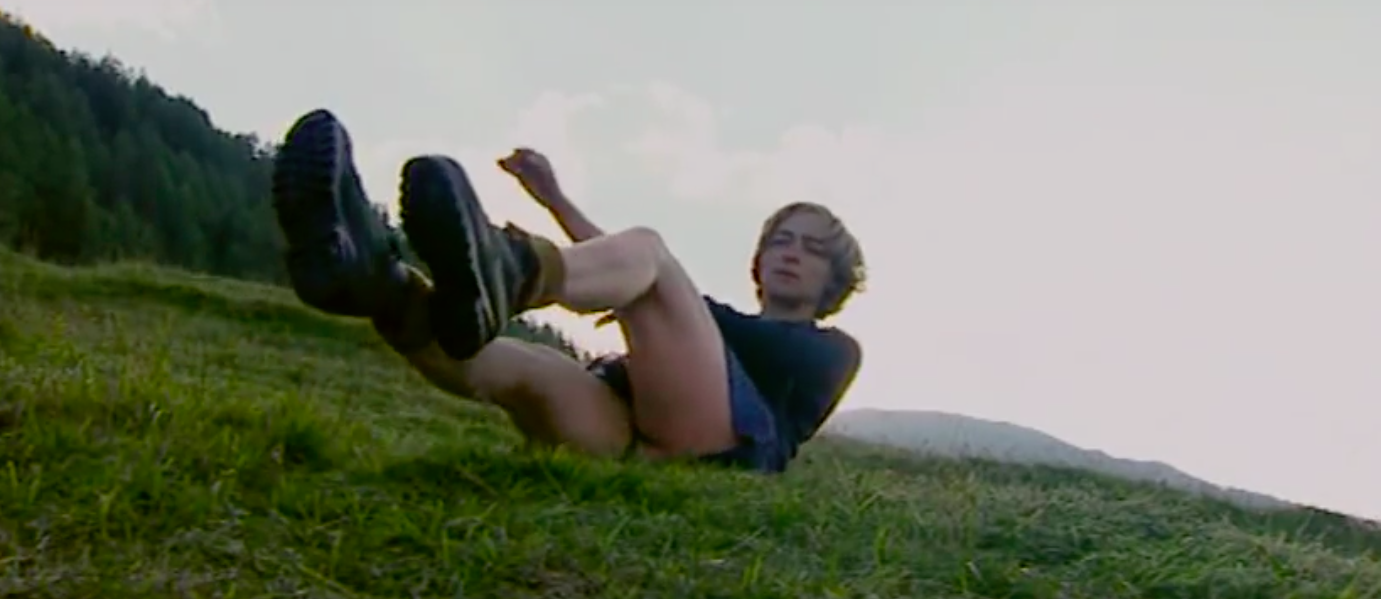 gives the viewer the sentiment that they too are rolling down a hill. When the dancers take on more stationary choreography, the camera technique keeps up the intense, spritely action of the rolling by staying close on different body parts of the dancers and quickly shifting to other body parts to obtain a new focus. While this action is taking place, the film interjects scenes of mountains and roaming cows every so often to give the video context, pointing out the closeness of this farming village amidst a big world.
The video shifts to a new location and zooms in closely on a woman’s hands and feet. This close proximity to her appendages allows for an intimate feel, showing the 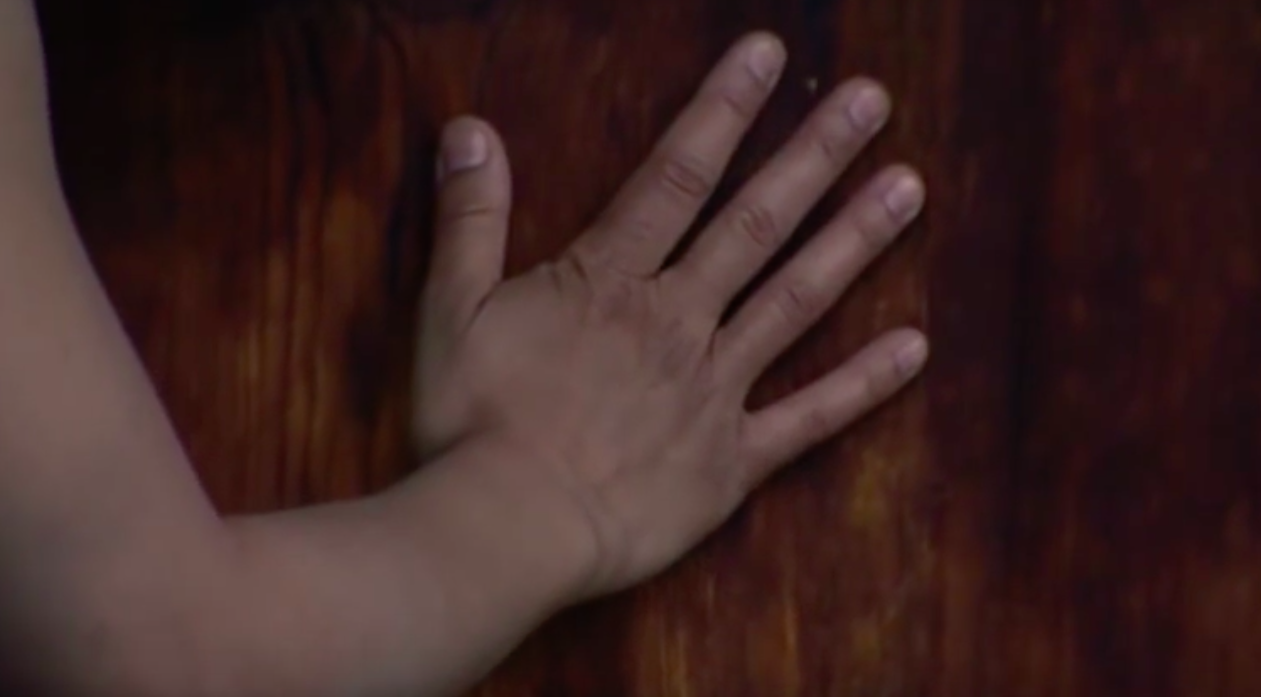 care she puts into each gestural movement. Suddenly, the film hits a sharp contrast as multiple angles of fighting and active cows come in. This is accompanied by a rise in the speed and exuberance of the music to showcase the lively action of the cows. As the dancers copy the movement of the cows, the camera shifts to a close-up on their heads to put all focus on the fact that they are head-butting like the cows.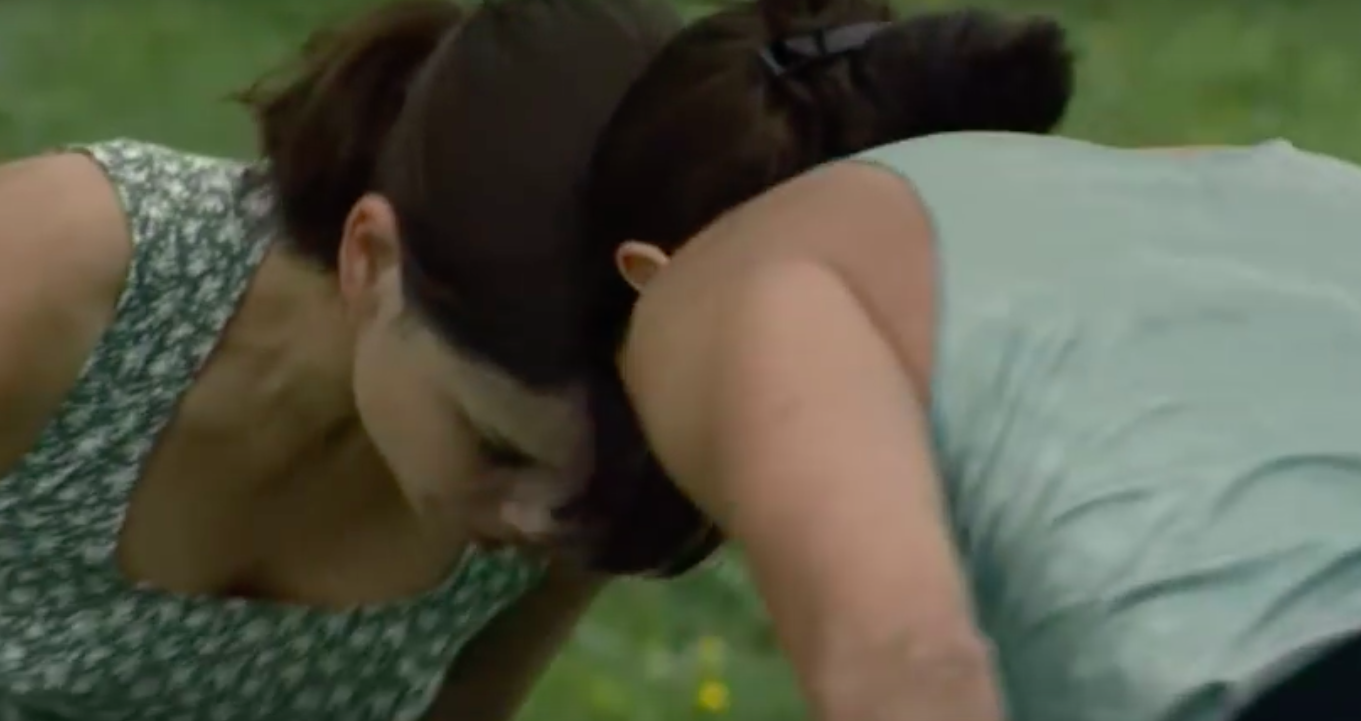
As the video shifts to encompass the villagers dancing and partying, near shots and far shots of the villagers are taken to emphasize both the intimacy of the town as 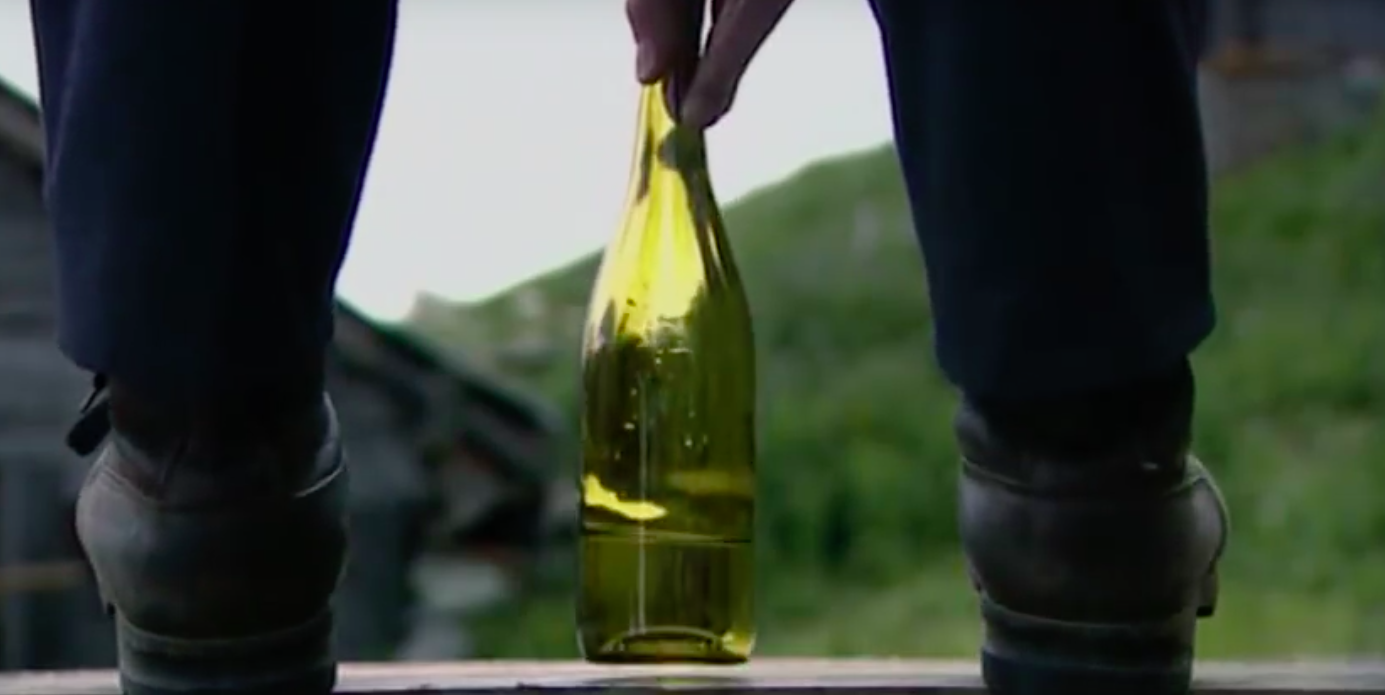 well as the community feel of all the people in it. The camera pans over people dancing to show the light airiness of the movement. The film shifts back to a focus on the dancers as they play with each other. When they play with the wine bottle, the camera completely focuses on the movement of the bottle rather than the movement of the dancers to show the quickness of how it moves about them. In addition, the camera
 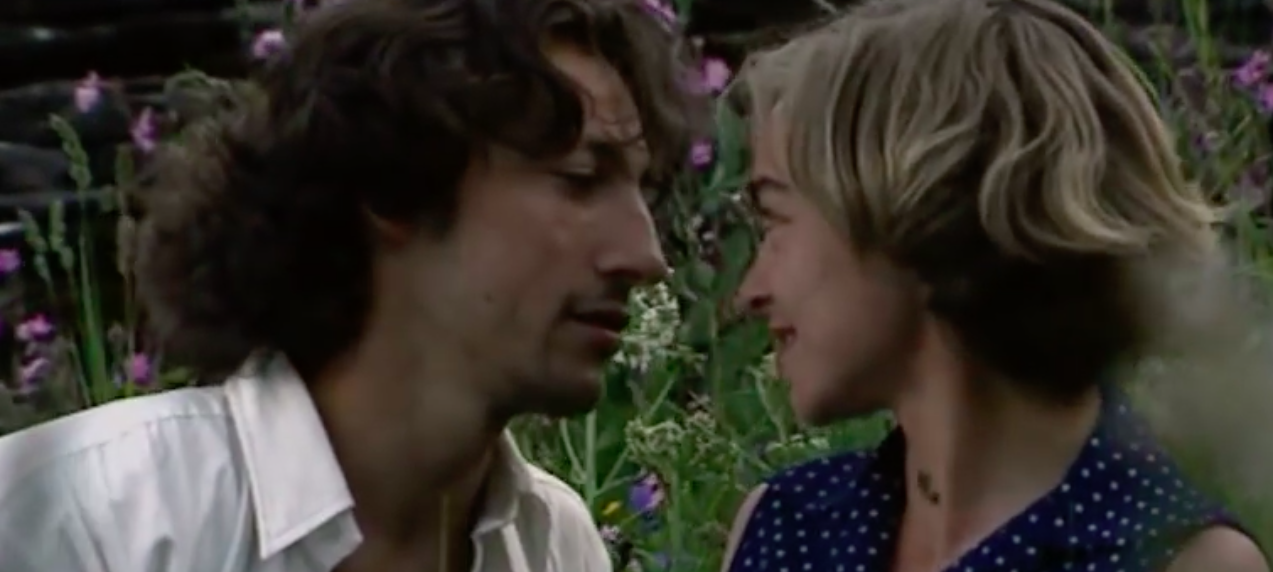 uses close-ups on the couples’ faces to emphasize the importance of expression in the choreography and the flirtatious attitude that is apparent between the performers.
The film comes to completion with a far view of the ladies at the water. This distant view lets the viewer feel as though they are watching a far off dream. This dreamlike quality is again enhanced as the camera focuses on the lights over the water, letting the dancers blur.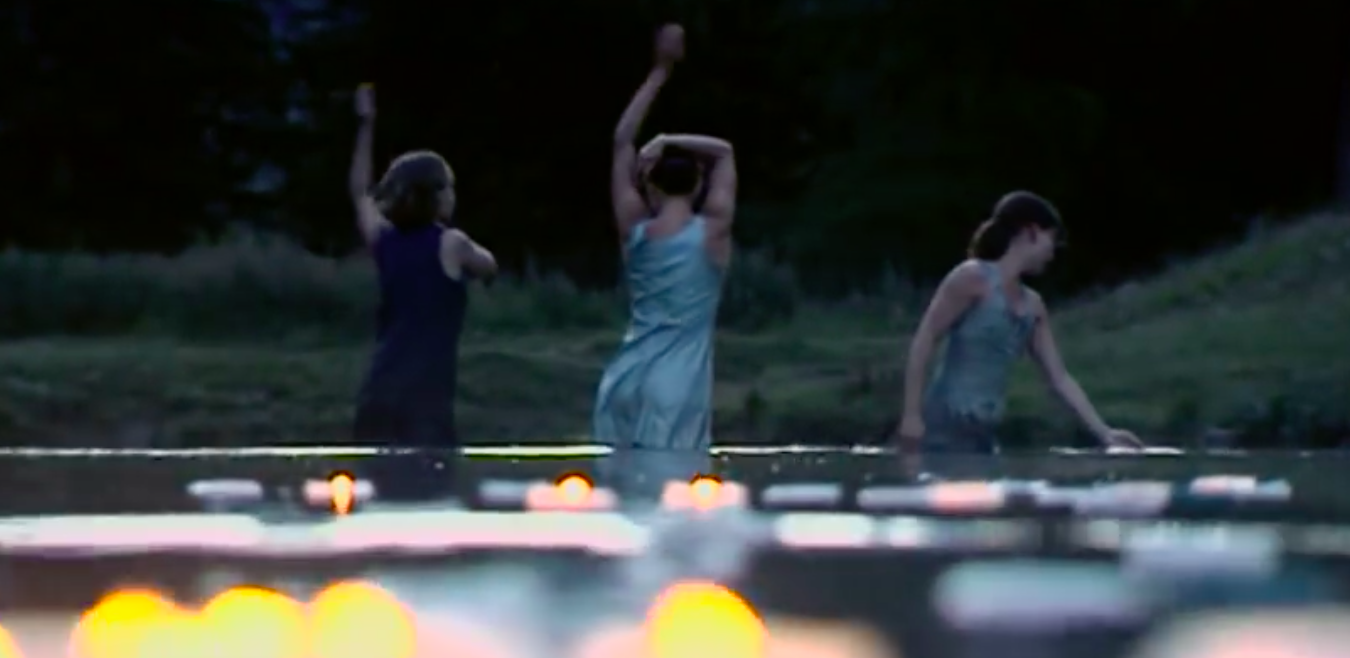
Altogether, the film uses a high frequency of complex angles to show dynamics in choreography as well as to set the scene for the mood of the entire performance.
 Kelsey Kempner